Handing a teenager the car keys is one of the more nerve-wracking milestones of parenting. You want to know they're okay. They want to feel like an adult, not a suspect. Most tracking apps force you to pick a side — and picking "surveillance" usually backfires.
The research on this is consistent: teens who feel spied on don't feel safer, they feel resentful. Many find workarounds — leaving a phone at a friend's house, disabling location "to save battery," or just tuning out a parent they've decided isn't trustworthy. Heavy-handed monitoring can end up producing exactly the blind spot it was meant to prevent.
The better goal isn't watching every mile your teen drives. It's knowing when something actually goes wrong, and having a foundation of trust so they'll tell you the rest.
The Trust-Visibility Tradeoff
Parents of new drivers usually want three things: to know their teen arrived safely, to be alerted immediately if there's a crash, and to have a general sense of where they are in an emergency. None of that requires watching a live dot move around town all day.
Teens, meanwhile, want privacy for ordinary reasons — stopping at a friend's house that wasn't on the plan, taking a longer route, or just not wanting to feel like every drive is being audited. Both of these are reasonable. The tension only turns into conflict when the tracking tool itself is one-directional.
How WheresNow Handles This Differently
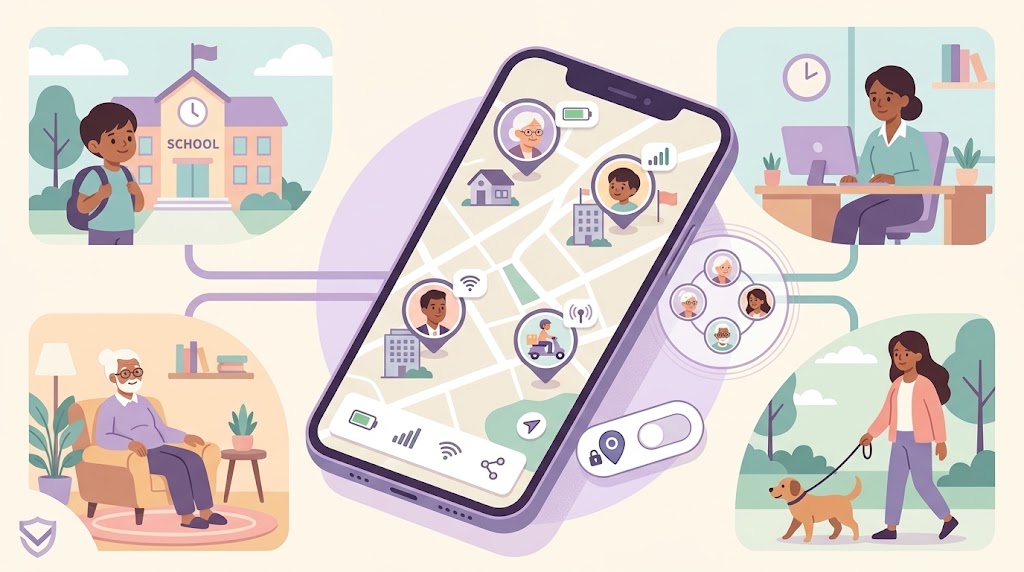
WheresNow is built on transparency by design: every member of a Circle can see who else can see their location. There's no hidden tracking, no silent monitoring mode. A teen opening the app sees exactly the same permissions their parent sees — which removes the "gotcha" feeling that makes covert tracking so corrosive to trust.
- Automatic crash detection — WheresNow can detect a car crash using phone sensors and immediately alert designated Circle members, even if the teen can't reach their phone. This is the actual safety signal parents are after, delivered without needing to watch the road every second.
- One-tap SOS — if something feels wrong, your teen can alert the family Circle instantly, on their own terms.
- Circle permissions — parents don't need 24/7 visibility to feel reassured. A Circle can be scoped so a teen's location is visible during agreed driving windows, or simply available on request, rather than tracked continuously by default.
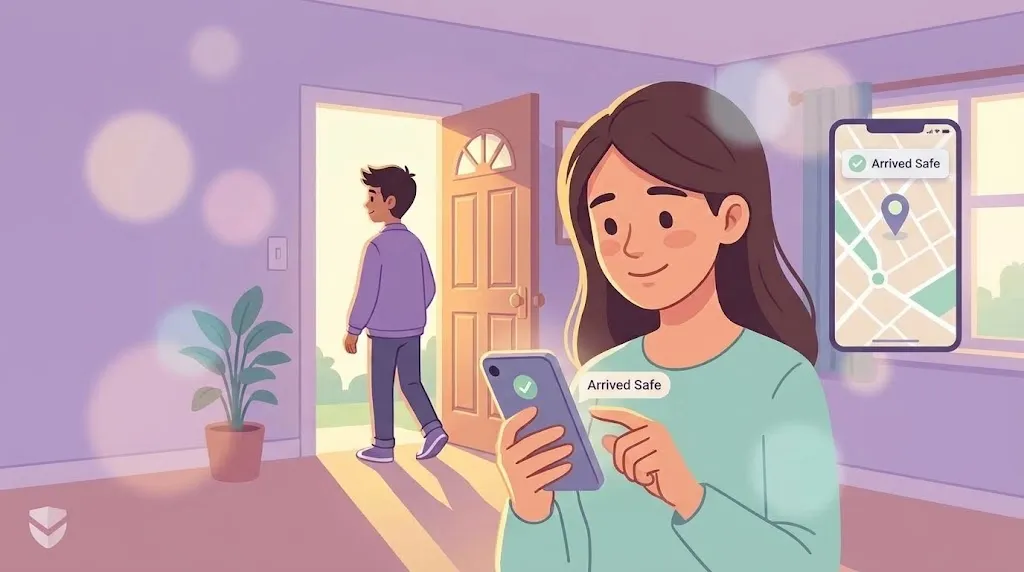
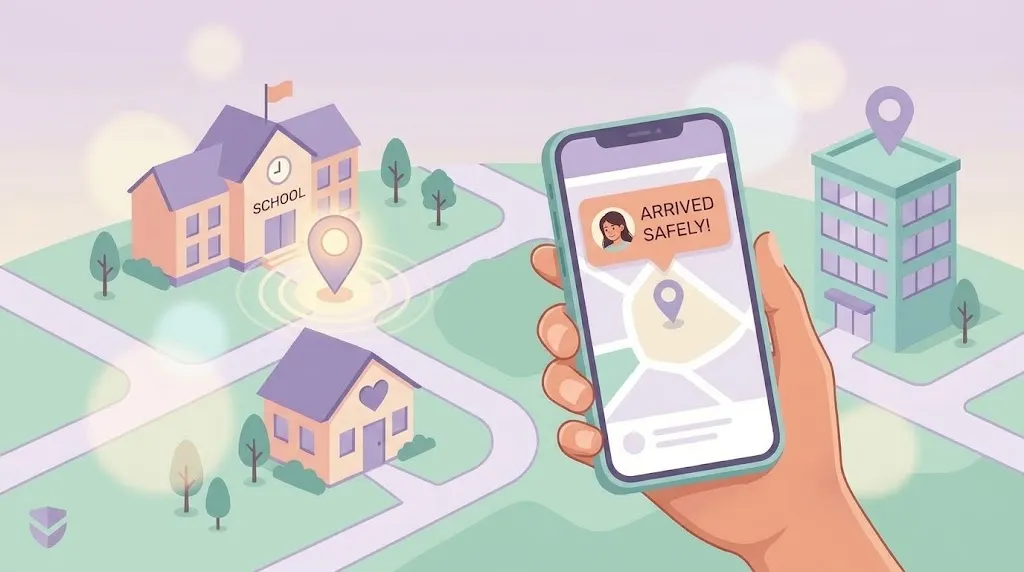
- Places and geofencing — instead of watching a live map, parents can get a quiet notification when a teen arrives at school, home, or work — the "did you get there okay" signal, without the play-by-play.
Surveillance vs. Safety Signal
| Approach | What it does | Effect on trust |
|---|---|---|
| Constant live tracking | Shows every movement in real time | Feels like surveillance; often circumvented |
| Crash detection + SOS | Alerts only when something's actually wrong | Reassures without hovering |
| Arrival notifications (Places) | Confirms safe arrival at set locations | Low-friction, high-signal |
| Hidden/one-way monitoring | Parent watches, teen doesn't know extent | Breaks trust when discovered |
Starting the Conversation
Set the Circle up together, not behind your teen's back. Walk through the permissions with them, show them what you can see and what you can't, and explain that crash detection and SOS are the features you actually care about — not a minute-by-minute log of their day. If your teen understands the app is protecting them, not policing them, they're far more likely to keep it on and actually use it when it matters.
It also helps to revisit the settings as trust builds. A new driver in their first month might warrant more visibility than a teen who's been driving safely for a year. WheresNow's permissions are easy to adjust as that changes, so the tool grows with your teen instead of staying frozen at "day one" settings forever.
None of this works if the tool feels adversarial. The goal is a family Circle your teen is glad to be part of — one where safety and privacy aren't competing, just built in together.
Download WheresNow and set up a Circle built for trust, not surveillance.