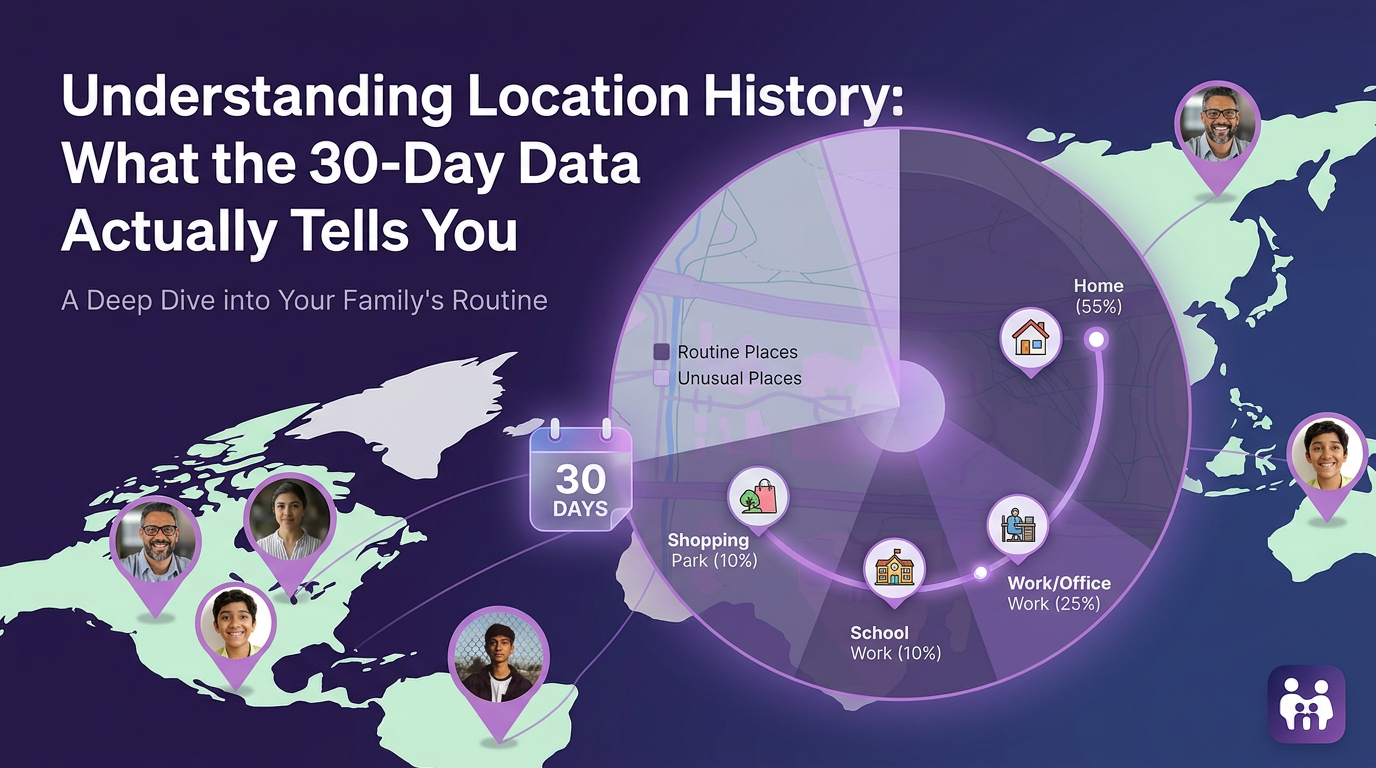
When we launched the 30-day location history feature, we expected it to be popular. We did not expect it to become the single most talked-about feature in our user community.
What does 30-day history actually store?
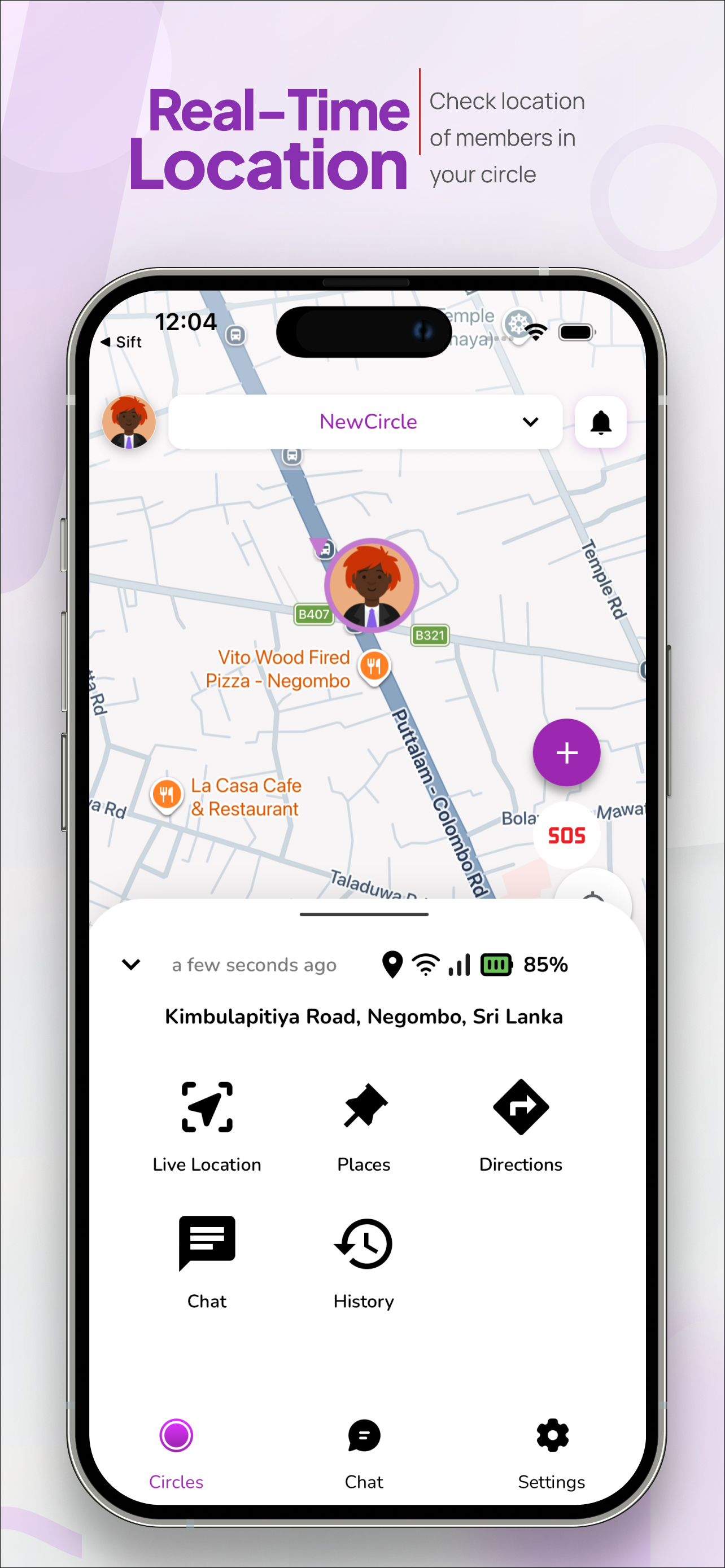
For each connected device in your circle, WheresNow continuously captures:
- GPS coordinates at regular intervals
- Speed at those intervals
- Place visits — when someone arrives at and departs from a location
- Route lines connecting the dots between positions
All of this is stored securely and is only accessible to the device owner and circle admins they explicitly grant access to.
How families use it differently than we expected
Our original assumption was that 30-day history would primarily be used for incident review — checking what happened after a car accident or a concerning night out.
What we found in practice was more nuanced. Families are using it to:
Understand commute changes. A parent noticed their teenager's school route had changed significantly. Turned out a road was closed. But the conversation starter was the history data.
Spot health patterns. One parent noticed their elderly father had stopped his daily walk in the park. The history data prompted a welfare check that led to an early medical intervention.
Resolve misunderstandings. Instead of arguments about "where were you?", the data becomes a neutral third party. Not accusatory — just factual.
The relationship between history and privacy
We have thought carefully about this. Location history is genuinely sensitive data. Here is how we approach it:
- Only circle members can access history, not us, not advertisers.
- Members can delete their own history at any time, no questions asked.
- Admins cannot retroactively grant themselves access to history data from before access was granted.
- Data older than 30 days is automatically purged from active storage.
Building better routines
One unexpected use case has been routine-building. Parents use the weekly summary to have conversations with their teenagers not about surveillance but about patterns.
"I noticed you hung out at the library three times this week — what are you working on?" is a very different conversation opener than "I was checking your location and saw you at the library."
The data becomes a starting point for connection, not confrontation.
Interested in seeing this in action? Download WheresNow and explore the history tab.