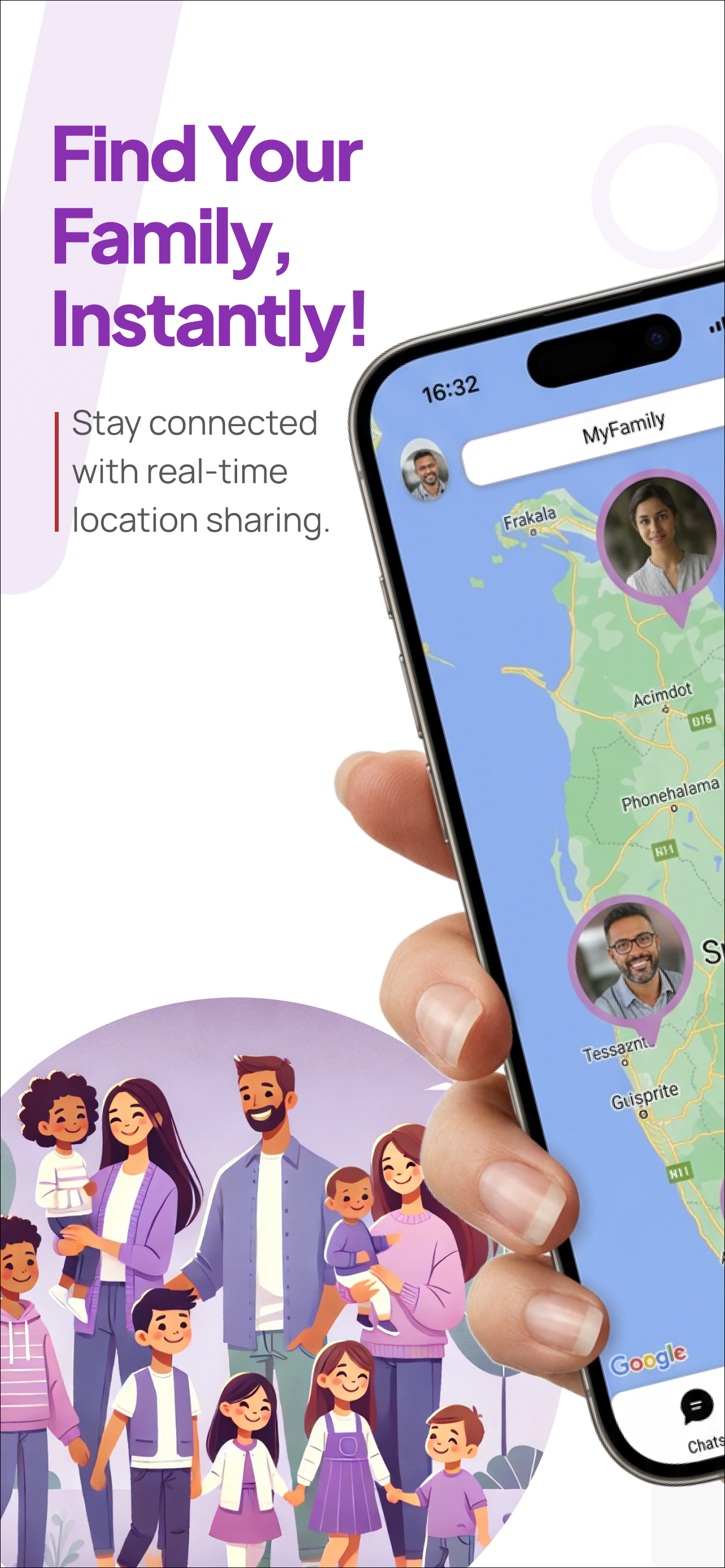
There are dozens of location sharing apps on the market. So why do families consistently choose WheresNow? We've compiled the most common reasons — some expected, some surprising.
1. It was built for families, not enterprise teams
Many location apps started as fleet tracking or enterprise tools and added a "family" mode as an afterthought. WheresNow was designed from day one for the specific dynamics of a family: mixed ages, varying levels of tech comfort, and a need for trust over surveillance.
This shows up in small but important ways — the interface is the same whether you're a parent or a teenager, privacy controls are equally prominent for everyone in a Circle, and there's no "admin mode" that gives one person hidden power over others.
2. Real, two-way transparency
Every member of a Circle can see every other member. There are no silent trackers, no one-way monitoring modes. When your teenager downloads WheresNow, they can see your location too. This shifts the dynamic from surveillance to coordination — a much healthier foundation for trust.
3. Privacy controls that are actually accessible
Privacy settings in most apps are buried. In WheresNow, the ability to pause location sharing is front and centre — not hidden in a settings sub-menu three taps deep. We believe that if you want people to trust an app, the off switch needs to be easy to find.
4. Multi-language support from launch
WheresNow launched with support for 8 languages, including English, Sinhala, Tamil, German, Spanish, and more. This matters enormously for multi-generational families or families that span countries. A grandparent in Sri Lanka can use the exact same app as their grandchild studying abroad in Germany — in their own language.
5. The details in the device status bar
When you tap a member in WheresNow, you don't just see their location — you see their battery percentage, GPS signal strength, data connectivity, and last updated time. This tells you immediately whether the location is fresh and reliable, or whether something might be wrong.
This level of transparency is rare. Most apps just show a location pin with no context about how old or reliable that information is.
6. Circles, not just a shared map
The Circle model lets families organise their location sharing thoughtfully. A teenager might be in the Family Circle and a Sports Team Circle. Parents might have a separate circle with extended family. Permissions, Places, and notifications are all managed independently per Circle, which means sharing is contextually appropriate rather than all-or-nothing.
7. 30-day history
Reactive safety is often more useful than live monitoring. The 30-day location history lets you look back at where someone has been, when they arrived, and how long they stayed — without requiring real-time surveillance. This is a feature parents find particularly valuable and teenagers find less intrusive.
WheresNow isn't the only location app, but it's the one built specifically to make family safety feel like coordination rather than control.
Download WheresNow and invite your first Circle member today.